
English version follows at the end.
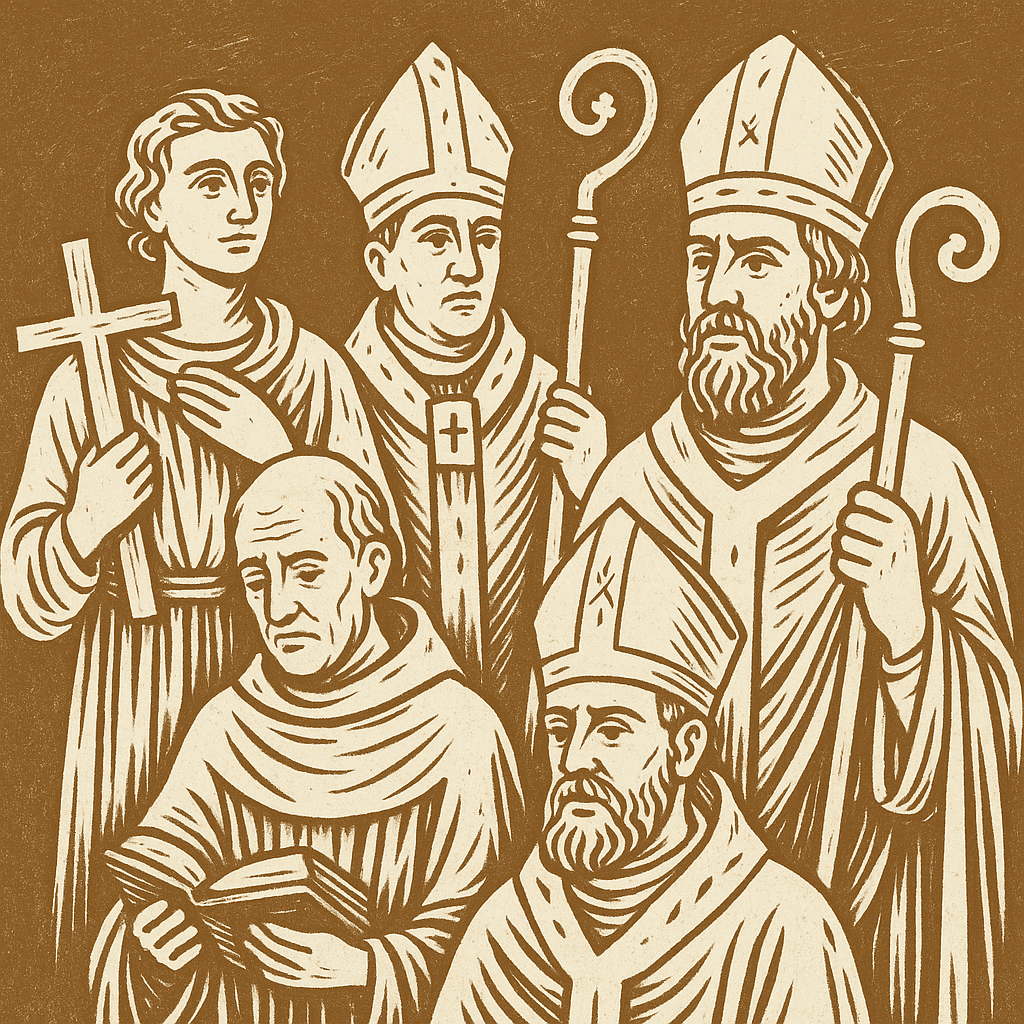
Nel territorio delle Marche si conservano numerose testimonianze di una profonda tradizione cristiana, risalente ai primissimi secoli dell’era cristiana. Diverse figure di santi e vescovi risultano legate a queste terre, ma le loro biografie ufficiali presentano spesso elementi contraddittori o poco credibili, che aprono interrogativi importanti sulla reale origine di questi personaggi.
Un esempio emblematico è quello di San Emidio, venerato ad Ascoli Piceno come protettore contro i terremoti. Secondo la tradizione agiografica, Emidio sarebbe nato a Treviri, nell’attuale Germania, che all’epoca era considerata una delle città principali della Gallia Belgica. Si dice che abbia ricevuto una raffinata istruzione, si sia convertito al cristianesimo in giovane età e sia stato ordinato sacerdote a Milano, prima di trasferirsi a Roma e poi ad Ascoli, su mandato di Papa Marcellino. Tuttavia, è lecito chiedersi perché un pontefice avrebbe scelto un forestiero proveniente da una regione ancora largamente pagana per guidare una comunità cristiana già strutturata come quella ascolana. Sarebbe stato più naturale, semmai, inviare un uomo come Emidio a evangelizzare la sua terra natale, ancora lontana dalla conversione. Questo paradosso suggerisce che le sue presunte origini germaniche possano riferirsi a una “Germania” diversa da quella moderna: una Germania situata nelle Marche.
Un’altra figura emblematica è quella di San Giuliano l’Ospitaliere, oggi patrono di Macerata. Secondo alcune fonti, Giuliano sarebbe nato nel Belgio. Dopo aver appreso da una profezia che sarebbe diventato l’assassino dei propri genitori, Giuliano si trasferisce in Galizia, nell’odierna Spagna, dove si sposa. La tragedia si compie quando, tornato a casa, scambia i genitori per amanti della moglie e li uccide. Ma la parte più sorprendente della leggenda riguarda proprio il viaggio dei due anziani genitori, che avrebbero attraversato l’intera Europa occidentale — dal Belgio alla Spagna — a piedi o con mezzi rudimentali. Un’ipotesi improbabile. Dopo la tragedia, Giuliano si dedica all’espiazione, vivendo da eremita e traghettatore lungo il fiume Potenza, nei pressi di Helvia Ricina, non lontano da Macerata. Anche in questo caso, la geografia del racconto sembra poco compatibile con le possibilità di spostamento dell’epoca. È molto più plausibile che la cosiddetta Gallia Belgica si trovasse in realtà nelle Marche.
Alla lista si aggiunge Lupo, vescovo che prese parte al sinodo dell’826, durante il pontificato di Papa Eugenio II. Nei documenti, viene indicato come “vescovo Furnense”, ma studi più recenti dimostrano che si trattava in realtà del vescovo di Fermo, nelle Marche. L’errore sarebbe stato causato da una trascrizione scorretta del termine “Firmense”. Tuttavia, l’abitudine degli studiosi di considerare automaticamente “errore” tutto ciò che non coincide con la narrazione storica ufficiale ha portato, nel caso marchigiano, a una sistematica svalutazione del patrimonio storico locale. Questo atteggiamento ha contribuito a ridurre il ruolo delle Marche nella storia religiosa italiana, come se la regione fosse sempre stata un’area di passaggio e mai di origine o di elaborazione.
Anche San Settimio, primo vescovo di Jesi, è indicato dalle fonti come proveniente dalla Germania. Il ripetersi costante, nelle biografie agiografiche, di figure sante che arrivano da luoghi lontani per stabilirsi proprio nelle Marche, solleva dubbi sulla veridicità storica di queste attribuzioni. È molto più plausibile che molte di queste figure siano nate e cresciute in territorio marchigiano. È difficile credere che una terra così precocemente cristianizzata avesse davvero bisogno di importare santi e vescovi dall’estero, tutti provenienti — guarda caso — dalla Francia o dalla Germania.
Fonte:

II + II. La storia dei popoli delle Marche ovvero l’origine dell’Europa – Simonetta Torresi
Fermo, Capital of Belgium (English Version)
The region of Marche preserves numerous traces of a deep-rooted Christian tradition, dating back to the earliest centuries of the Christian era. Several saints and bishops are associated with these lands, but their official biographies often contain contradictory or scarcely credible elements, raising important questions about their true origins.
A particularly emblematic case is that of Saint Emygdius (San Emidio), venerated in Ascoli Piceno as a protector against earthquakes. According to hagiographic tradition, Emygdius was born in Trier, in what is now Germany—at the time, considered one of the principal cities of Gallia Belgica. He is said to have received a refined education, converted to Christianity at a young age, and been ordained a priest in Milan before moving to Rome and eventually to Ascoli, sent there by Pope Marcellinus. However, one must ask why a pope would choose a foreigner from a still largely pagan region to lead an already well-established Christian community like that of Ascoli. It would have made more sense to send someone like Emygdius to evangelize his own native land, which was still far from conversion. This paradox suggests that his supposed German origins may refer to a different “Germany”—one located in the Marche region.
Another symbolic figure is Saint Julian the Hospitaller (San Giuliano l’Ospitaliere), now the patron saint of Macerata. According to some sources, Julian was born in Belgium. After learning from a prophecy that he would one day kill his parents, Julian moved to Galicia, in present-day Spain, where he married. The tragedy unfolds when he returns home and, mistaking his parents for his wife’s lovers, kills them. But the most surprising part of the legend is the journey of his elderly parents, who are said to have traveled across Western Europe—from Belgium to Spain—either on foot or by rudimentary means. This seems highly unlikely. After the tragedy, Julian devoted himself to penance, living as a hermit and ferrying travelers across the Potenza River, near Helvia Ricina, not far from Macerata. Here too, the geography of the tale seems inconsistent with the travel capabilities of the time. It is much more plausible that the so-called Gallia Belgica was actually located in the Marche region.
To this list we can add Lupus (Lupo), a bishop who took part in the Synod of 826, during the pontificate of Pope Eugene II. Historical records refer to him as the “Bishop of Furno,” but more recent studies have shown that he was, in fact, the Bishop of Fermo, in the Marche. The confusion likely stems from a misreading of the Latin term Firmense. However, scholars’ tendency to automatically label as “errors” anything that doesn’t align with the official historical narrative has, in the case of the Marche, led to a systematic devaluation of the region’s historical heritage. This attitude has helped minimize the Marche’s role in Italy’s religious history, as if the region were merely a place of passage and never a place of origin or development.
Saint Septimius (San Settimio), the first bishop of Jesi, is also described by sources as coming from Germany. The recurring pattern in hagiographic biographies of saints supposedly arriving from faraway lands to settle in the Marche raises doubts about the historical accuracy of these claims. It seems far more likely that many of these figures were born and raised in the Marche. It is difficult to believe that a land so early Christianized would have needed to “import” all its saints and bishops—especially when they all conveniently happen to come from France or Germany.
Source: II + II. La storia dei popoli delle Marche ovvero l’origine dell’Europa – Simonetta Torresi






Rispondi