

English version follows at the end.
Simonetta Torresi racconta che fin da bambina ha iniziato a farsi delle domande. Cresciuta nelle Marche, si è sempre stupita del fatto che ogni dieci chilometri – a volte anche meno – si trovino siti archeologici, castelli, borghi fortificati. Nonostante questa ricchezza, nei libri scolastici non compariva quasi nulla: la sua regione sembrava del tutto assente dal racconto storico.
Secondo Torresi, però, non è possibile che in una terra non sia accaduto nulla. Per questo, più di trent’anni fa, ha cominciato a indagare in modo sistematico. Da allora si dedica a questi studi e ha pubblicato numerosi libri, incentrati in particolare su quella che definisce “la geografia della storia”.
Il volume a cui ha lavorato più a lungo, “II + II. La storia dei popoli delle Marche ovvero l’origine dell’Europa”, le ha richiesto anni di ricerca, perché – afferma – le scoperte erano a dir poco sconvolgenti. Analizzate tutte insieme possono sembrare incredibili, ma se considerate punto per punto diventano comprensibili e coerenti. A suo avviso, guardare la storia da un’altra prospettiva permette agli eventi di assumere un senso e di prendere vita.
Torresi sottolinea che attenersi rigidamente alla versione tradizionale – quella che oggi viene definita mainstream – rende difficile associare correttamente luoghi, eventi e civiltà. Un problema che riguarda molti paesi, ma che in Italia appare in maniera particolarmente evidente.
Con il concetto di geografia della storia, Torresi intende che gli eventi raccontati dalle fonti sono realmente accaduti e documentati, ma spesso mancano riscontri monumentali o archeologici. Porta l’esempio di palazzi reali, abbazie o città citate nei testi: quando si scava nei luoghi indicati, non si trovano né resti monumentali né tracce archeologiche. Questo ha portato alcuni studiosi ad affermare che interi periodi storici non siano mai esistiti. Per Torresi, invece, il problema è che spesso si cercano le prove nel posto sbagliato.
Quando invece si indaga nei luoghi in cui gli eventi si sono davvero svolti, le tracce riemergono. Molte conferme, spiega, le ha trovate attraverso lo studio della vita dei santi. Di solito, infatti, i santi vengono analizzati solo come figure religiose o attraverso i loro scritti, senza considerarli nel contesto storico in cui hanno vissuto. Eppure erano persone del loro tempo, inserite in reti di relazioni politiche e sociali.
Non di rado, osserva Torresi, le città indicate come luogo di vita o di morte di un santo non corrispondono alla realtà: indagando con attenzione, emergono invece tracce in località completamente diverse. Non a caso, oggi molte reliquie di santi vengono spostate, segno che queste questioni stanno tornando al centro del dibattito.
Per Simonetta Torresi resta un principio imprescindibile: ogni fatto storico deve avere un riscontro archeologico o monumentale. Se questo riscontro manca, significa che in quel luogo non esisteva davvero la città, il palazzo o la struttura indicata dai documenti scritti.
Fonte:
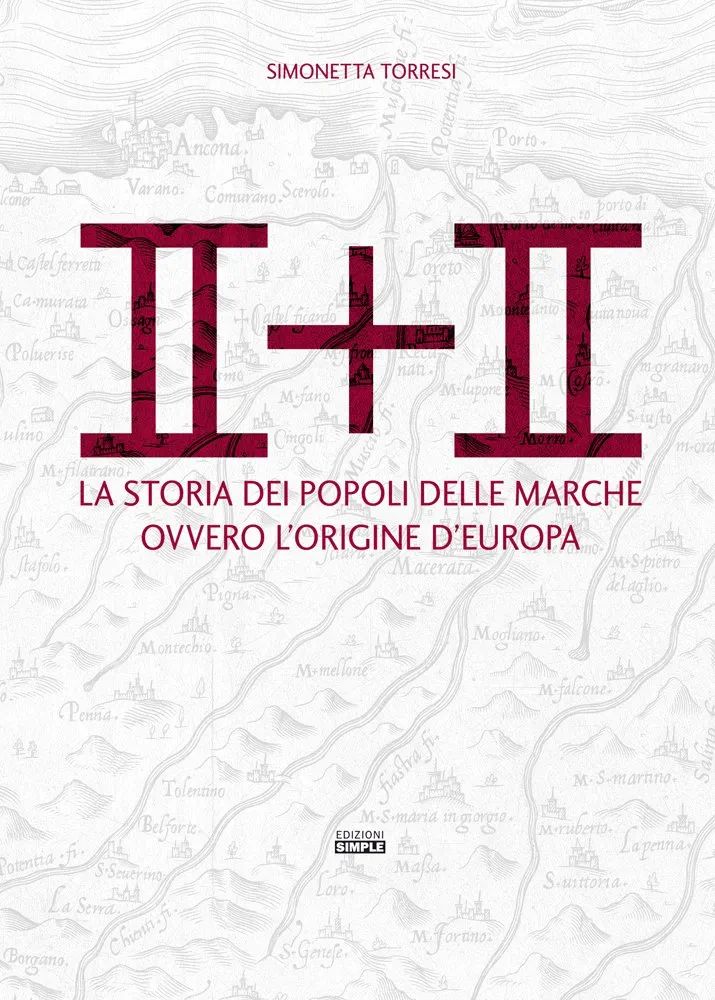
II + II. La storia dei popoli delle Marche ovvero l’origine dell’Europa – Simonetta Torresi
Geography of History in the Marche region (English Version)
Simonetta Torresi recounts that, ever since she was a child, she began asking herself questions. Growing up in the Marche region, she was always amazed by the fact that every ten kilometers – sometimes even less – there are archaeological sites, castles, and fortified villages. Despite this richness, school textbooks mentioned almost nothing: her region seemed completely absent from the historical narrative.
According to Torresi, however, it is impossible that nothing happened in a land. For this reason, more than thirty years ago, she began investigating systematically. Since then, she has devoted herself to these studies and has published numerous books, focusing in particular on what she calls “the geography of history.”
The work she spent the most time on, II + II. The History of the Peoples of the Marche, or the Origin of Europe, required years of research because – she states – the discoveries were nothing short of astonishing. When analyzed together, they may seem incredible, but considered point by point, they become understandable and coherent. In her view, looking at history from a different perspective allows events to make sense and come alive.
Torresi emphasizes that strictly adhering to the traditional version – what is today called the mainstream narrative – makes it difficult to correctly associate places, events, and civilizations. This is a problem in many countries, but in Italy it appears particularly evident.
By the concept of the “geography of history,” Torresi means that the events recorded in sources really did occur and are documented, but often lack monumental or archaeological evidence. She cites examples such as royal palaces, abbeys, or cities mentioned in texts: when excavations are conducted at the indicated sites, neither monumental remains nor archaeological traces are found. This has led some scholars to claim that entire historical periods never existed. For Torresi, however, the problem is that evidence is often sought in the wrong place.
When, instead, investigations are carried out in the locations where the events actually took place, traces reappear. She explains that many confirmations have come through the study of the lives of saints. Usually, saints are analyzed only as religious figures or through their writings, without considering them in the historical context in which they lived. Yet they were people of their time, embedded in networks of political and social relationships.
Torresi notes that it is not uncommon for the cities indicated as the place of a saint’s life or death to not correspond to reality: careful investigation instead reveals traces in entirely different locations. It is no coincidence that today many saints’ relics are relocated, a sign that these issues are returning to the center of scholarly debate.
For Simonetta Torresi, one principle remains indispensable: every historical fact must have archaeological or monumental confirmation. If this confirmation is lacking, it means that in that location the city, palace, or structure indicated by written documents did not really exist.
Source: II + II. La storia dei popoli delle Marche ovvero l’origine dell’Europa – Simonetta Torresi






Rispondi