
English version follows at the end.
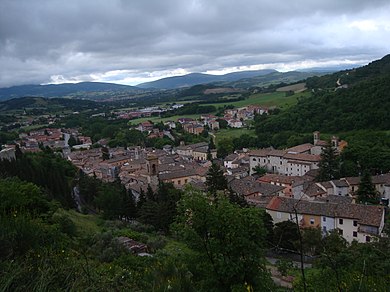
Nel territorio dello jesino e delle Marche, affiorano tracce antiche che rivelano una storia affascinante. Un esempio significativo è una lapide murata alla base della torre campanaria di Esanatoglia, una cittadina situata su un’altura che domina la valle di San Giovanni, vicino al fiume Esino, il quale scorre anche nei pressi di Jesi. La scritta incisa sulla pietra riporta il nome “Aesae”, associato sia alla città sia a una divinità celtica, Esus, nota per riti sacrificali particolarmente cruenti.
Il nome “Aesae” si collega inoltre agli Asi, figure mitologiche di un pantheon nordico che governavano il cielo. Secondo le leggende, questi dèi migrarono dalla loro terra d’origine, spesso identificata con l’Asia o con la mitica città di Troia, verso nuove regioni. In modo curioso, un legame simbolico sembra emergere tra i miti nordici e il territorio marchigiano, dove nomi come Jesi e Esanatoglia richiamano il termine “Aesi”, lo stesso usato per il fiume Esino.
Non è un caso che nella toponomastica locale si trovino altri riferimenti affini: il torrente Asola, lungo la strada tra Jesi e Macerata, e un altro corso d’acqua con lo stesso nome vicino a Morrovalle. A questi si aggiungono luoghi come Treia, anticamente nota come “la Troja”, che richiama il mito della migrazione dall’antica Troade. Anche il fiume Aso e città come Pedaso e Montefiore dell’Aso, situati nella zona di Fermo e Ascoli Piceno, sembrano legarsi a queste radici storiche.
Il termine “Asi” potrebbe derivare da una radice indoeuropea che significa “spirito” o “demone”, collegandosi all’idea di esseri divini che infondono vita. Secondo alcune tradizioni, gli Asi avrebbero cercato di tornare alle loro origini, compiendo un viaggio a ritroso verso le terre creatrici, un movimento che riflette le continue migrazioni che hanno caratterizzato la storia umana.
In Val Camonica, nel nord Italia, emergono ulteriori parallelismi con i luoghi delle Marche: Esine e Osimo portano gli stessi nomi di Jesi e Osimo nella provincia di Ancona. Questo sembra indicare un percorso di spostamento culturale e umano che unisce diverse parti d’Europa.
Le migrazioni degli Asi e di altre popolazioni li portarono attraverso la Pannonia e lungo il Danubio, fino a insediarsi in territori abitati dai Biturigi e dagli Ari. Tali spostamenti trovano eco anche nelle Marche, dove Foglietti ipotizzò un collegamento tra alcune aree locali e la Sicilia. Secondo questa teoria, i Siculi, antichi abitanti delle Marche, si sarebbero poi trasferiti nel Lazio, portando con sé ricordi di città e leggende, come quella di una “Troja” marchigiana.
L’intreccio tra miti, toponimi e scoperte archeologiche evidenzia come le Marche abbiano rappresentato un crocevia di culture e influenze, da quelle galliche a quelle mediterranee, in un continuo dialogo tra passato e presente.
Fonte:

II + II. La storia dei popoli delle Marche ovvero l’origine dell’Europa – Simonetta Torresi
Foto: Wikipedia, Esanatoglia
Nordic Myths in the Marche Region (English Version)
In the territory of Jesi and the Marche region, ancient traces emerge, revealing a fascinating history. A significant example is a plaque embedded at the base of the bell tower in Esanatoglia, a small town perched on a hill overlooking the San Giovanni Valley, near the Esino River, which also flows by Jesi. The inscription on the stone bears the name “Aesae,” associated both with the town and a Celtic deity, Esus, known for particularly gruesome sacrificial rites.
The name “Aesae” is also linked to the Aesir, mythological figures of a Nordic pantheon that ruled over the heavens. According to legends, these gods migrated from their homeland, often identified as Asia or the mythical city of Troy, to new regions. Interestingly, a symbolic connection seems to emerge between Nordic myths and the Marche region, where names like Jesi and Esanatoglia echo the term “Aesi,” the same name used for the Esino River.
It is no coincidence that local toponyms reveal other similar references: the Asola stream, along the road between Jesi and Macerata, and another watercourse of the same name near Morrovalle. Added to these are places like Treia, once known as “la Troja,” recalling the myth of migration from ancient Troy. Similarly, the Aso River and towns such as Pedaso and Montefiore dell’Aso, located in the Fermo and Ascoli Piceno areas, appear connected to these historical roots.
The term “Aesir” may derive from an Indo-European root meaning “spirit” or “demon,” tied to the idea of divine beings that breathe life into the world. According to some traditions, the Aesir sought to return to their origins, embarking on a reverse journey toward their creator lands—a movement reflecting the continuous migrations that have characterized human history.
In Val Camonica, in northern Italy, further parallels with the Marche region emerge: Esine and Osimo share the same names as Jesi and Osimo in the province of Ancona. This seems to indicate a cultural and human migratory path connecting different parts of Europe.
The migrations of the Aesir and other peoples led them through Pannonia and along the Danube River, eventually settling in territories inhabited by the Bituriges and the Ari. These movements resonate in the Marche region, where Foglietti hypothesized a connection between some local areas and Sicily. According to this theory, the Siculi, ancient inhabitants of the Marche, later moved to Lazio, carrying with them memories of cities and legends, such as that of a “Troja” in the Marche.
The interweaving of myths, place names, and archaeological discoveries highlights how the Marche region has served as a crossroads of cultures and influences, from Gallic to Mediterranean, in a continuous dialogue between past and present.
Source: II + II. La storia dei popoli delle Marche ovvero l’origine dell’Europa – Simonetta Torresi
Photo: Wikipedia, Esanatoglia






 Marche Magne
Lascia un commento