
English version follows at the end
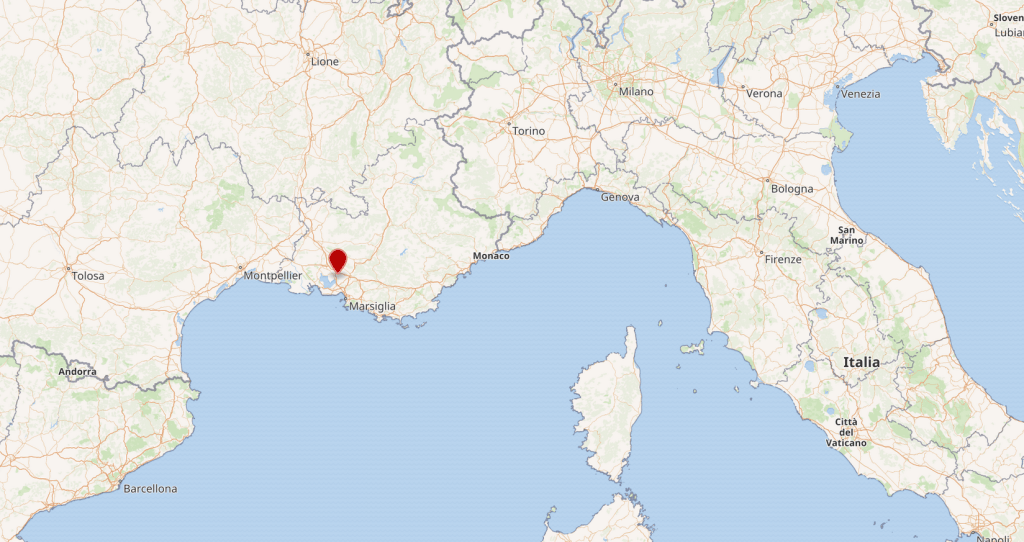
Secondo la storia ufficiale, intorno al IV-III secolo a.C., nel sud dell’attuale Francia, esisteva uno dei templi celtici fortificati più famosi a Roquepertuse. Questo oppidum, esteso su due terrazze, fu incendiato dai Romani intorno al II secolo a.C. Tuttavia, oggi non rimangono tracce di strutture come altari, siti di sacrificio o fossati.
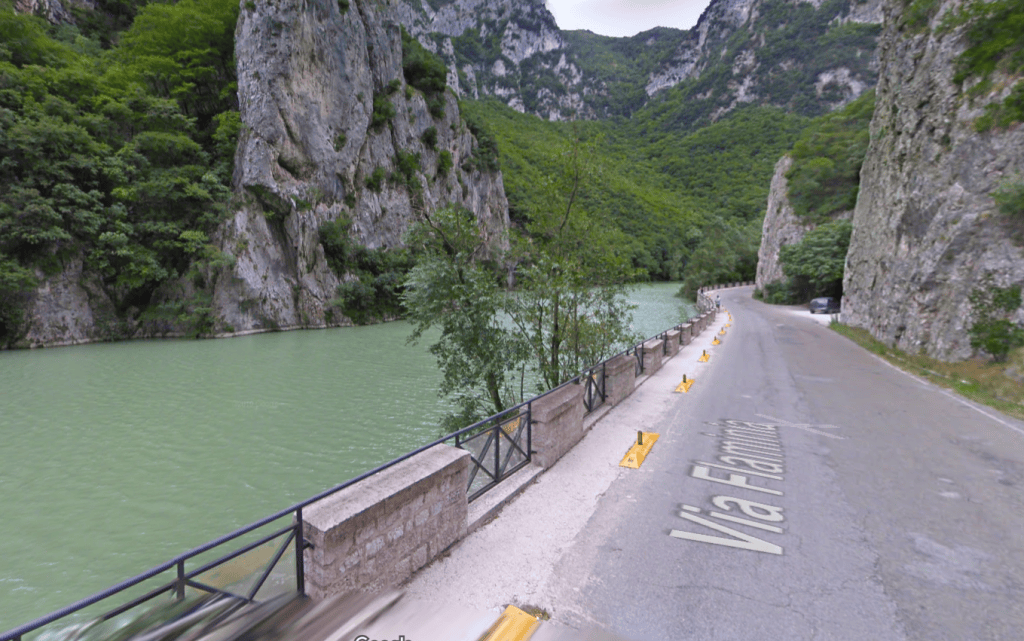
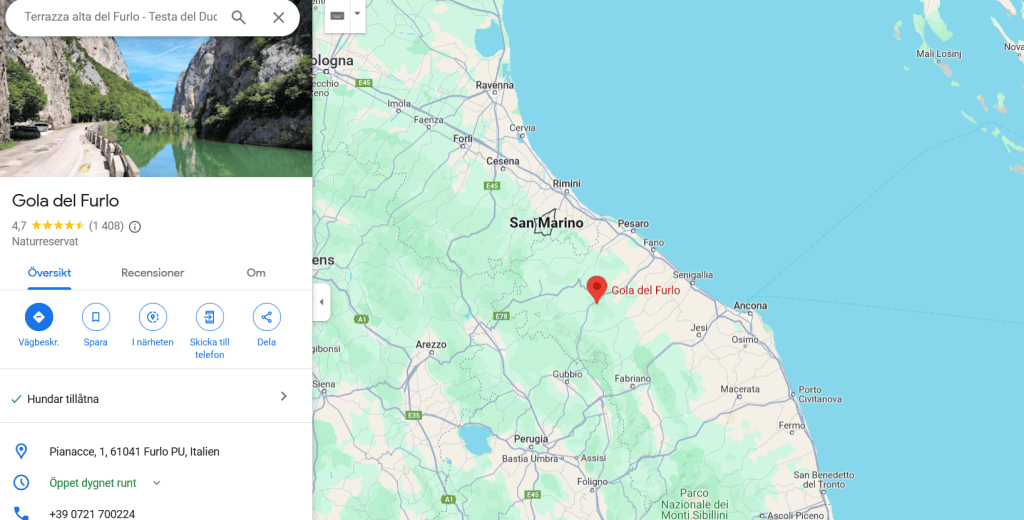
Secondo la storia, parte dell’attuale regione Marche era abitata dai Galli. I ricercatori stanno cercando una località con un nome simile dove potrebbe essere esistito il famoso tempio celtico. Lungo il fiume Metauro, vicino al luogo dove i Galli Senoni si allearono con Asdrubale nel 207 a.C., si trova un posto chiamato “Petra-Pertusa”. Il nome deriva da un tunnel scavato nella roccia, alto 4,5 metri, largo 3,5 metri e lungo 8 metri. Questo tunnel si trova accanto a un altro più grande e lungo che l’imperatore Vespasiano fece scavare attraverso la roccia di Furlo nel 76 d.C. La somiglianza dei nomi tra il sito del famoso oppidum e Furlo, dove vivevano i Galli, suggerisce che l’importante area del tempio potrebbe trovarsi nella regione Marche. Procopio conferma l’antichità di Petra Pertusa, esistente in epoca preromana, nel suo “Secondo Libro della Guerra Gotica,” dove menziona che gli antichi creavano una piccola apertura in quella gola.
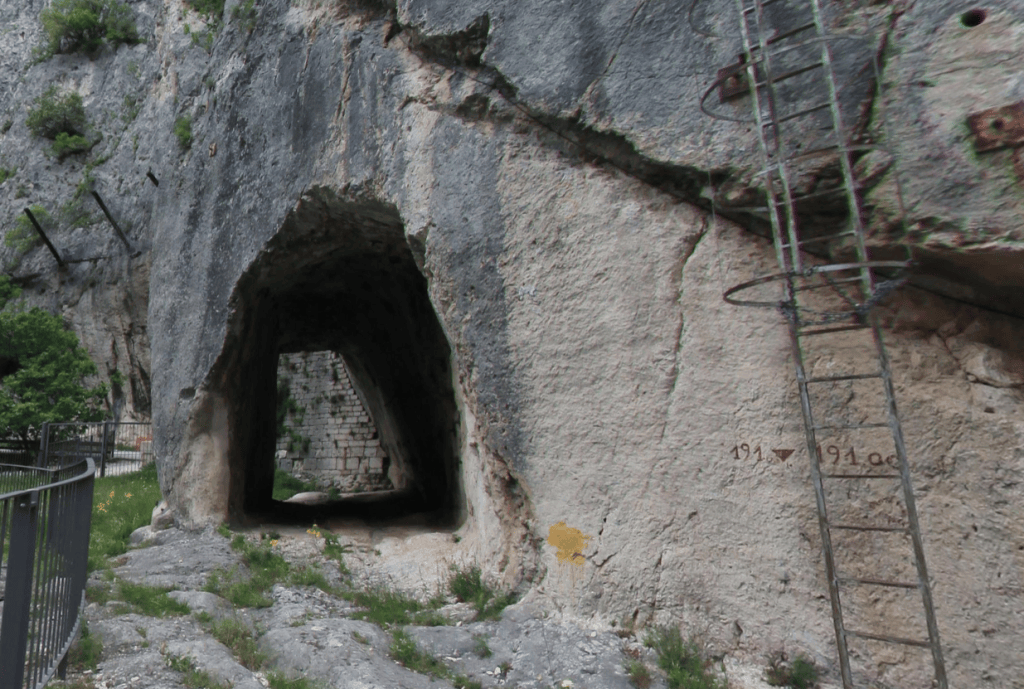
Tunnel scavato dai Galli
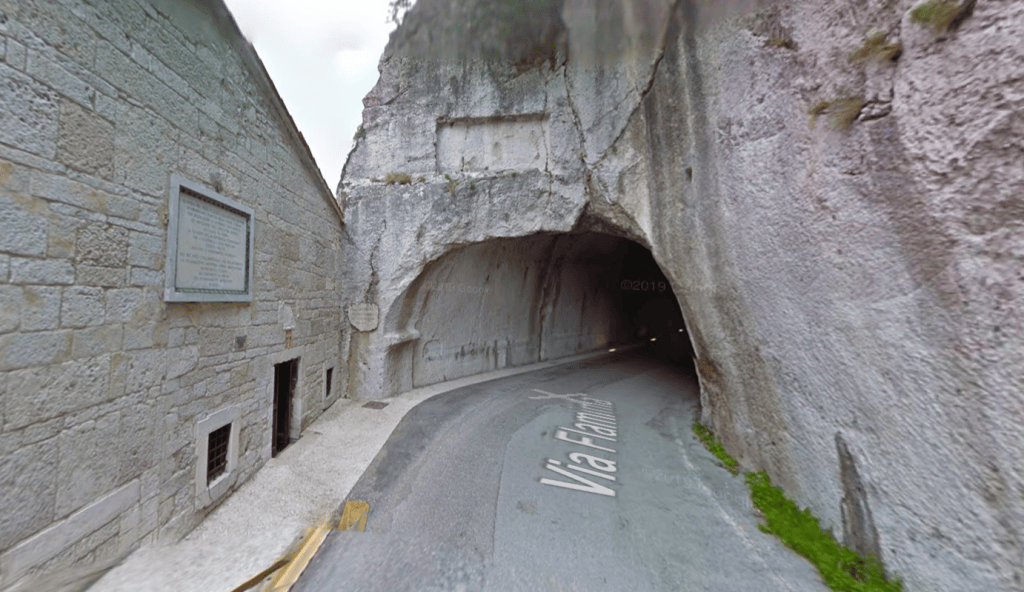
Tunnel scavato dall’imperatore romano Vespasiano
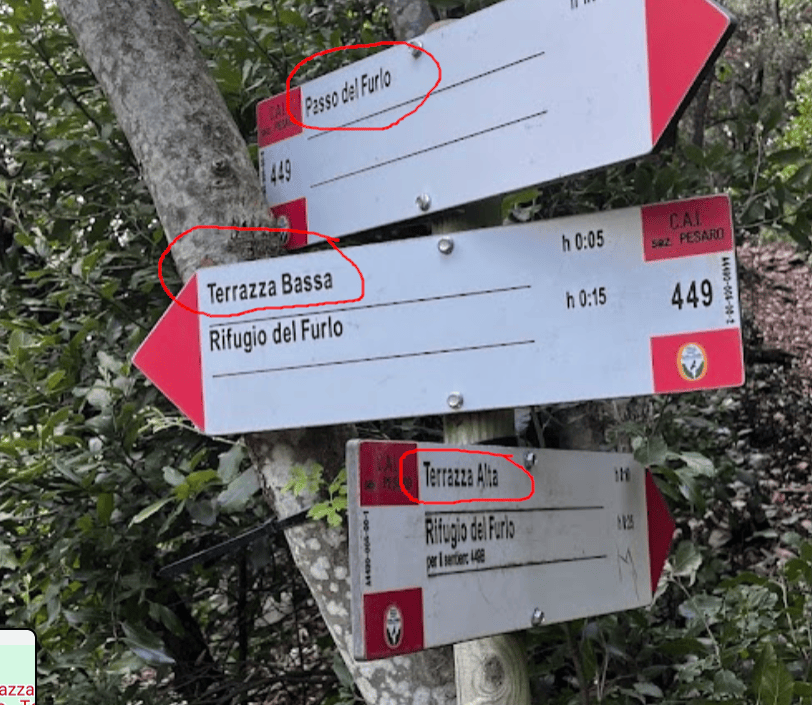
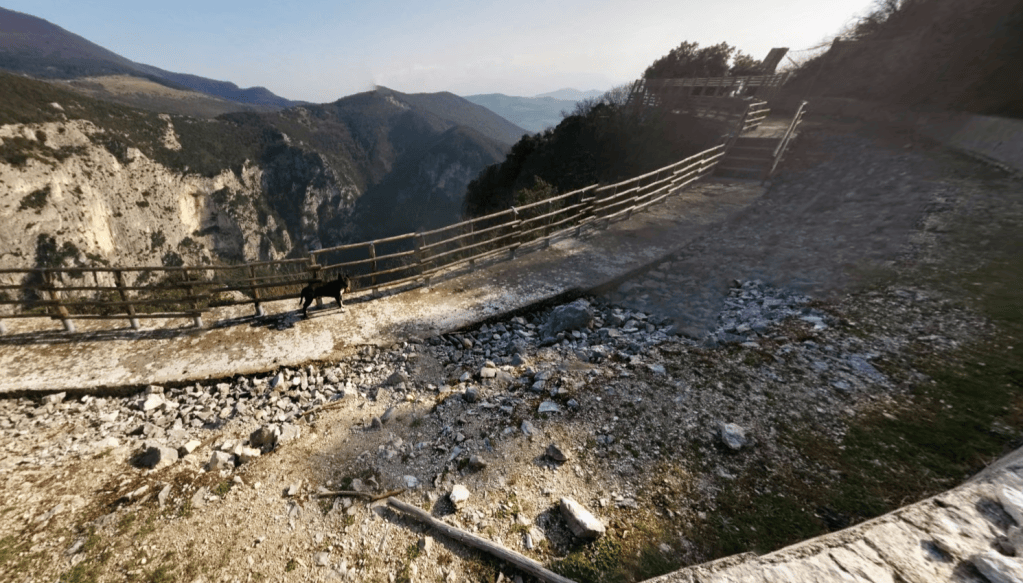
Terrazza Superiore
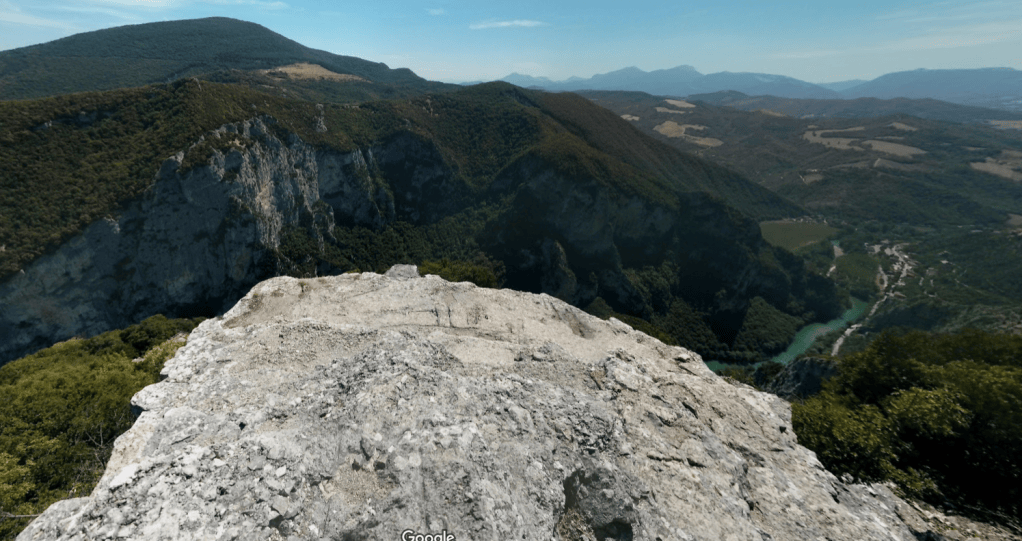
Terrazza Inferiore
I popoli antichi menzionati da Procopio potrebbero essere stati gli antenati degli Umbri o dei Galli, che si stavano espandendo nella zona, come dimostra la città di Cagli (PU), situata a sud-ovest di Petra Pertusa. Questa città era umbra fino al 265 a.C. e successivamente divenne gallica, con una significativa presenza dei Senoni. La presenza gallica è testimoniata dal dialetto celtico simile a quello di Senigallia, sebbene a Cantiano, vicino a Petra Pertusa, questa influenza sia meno pronunciata.
Esistevano due località chiamate Petra Pertusa: una nel sud della Francia, abitata dai Liguri, e una nella regione Marche, abitata da Umbri e Senoni. La mancanza di reperti in Francia suggerisce che il famoso tempio potrebbe trovarsi nella regione Marche, vicino alla Gola del Furlo, dove i Romani, dopo la Battaglia del Metauro nel 207 a.C., avrebbero incendiato il sacro oppidum dei Galli e degli Umbri alleati con Asdrubale.
La città di Cagli, originariamente umbra, passò ai Galli e successivamente si alleò con i Romani. Dopo il 219 a.C., il console Flaminio migliorò la strada della città e i Romani stabilirono accampamenti e stazioni postali nelle vicinanze, come indicato da Arseni. Cagli mantenne la sua importanza attraverso i secoli, con reperti archeologici che confermano la sua significanza storica.
I Galli erano divisi in molte tribù, tra cui gli Ikuvini, che in seguito fondarono Gubbio (PG). Gli Ikuvini, alleati di Asdrubale, potrebbero aver nascosto oggetti sacri dal tempio di Petra Pertusa, come sette grandi lastre di bronzo con iscrizioni druidiche, trovate vicino a Cantiano e vendute a Gubbio nel 1456. Queste lastre contengono rituali e maledizioni contro gli stranieri.
Le dieci tribù degli Ikuvini, ostacolate nella loro espansione, si vendicarono contro i popoli vicini, come i Naharki, che vivevano lungo il fiume Nera tra Marche e Umbria. La continuità dei nomi geografici suggerisce una traccia della presenza di questi antichi popoli.
The Roquepertuse Temple: Gauls, Romans, And The Petra-Pertusa Theory (English Version)
According to official history, around the 4th-3rd century BCE in the south of present-day France, there existed one of the most famous fortified Celtic temples at Roquepertuse. This oppidum, spread over two terraces, was burned by the Romans around the 2nd century BCE. However, no traces of structures such as altars, sacrificial sites, or moats remain today.
According to history, part of the modern-day Marche region was inhabited by the Gauls. Researchers are seeking a namesake location where the famous Celtic temple might have existed. Along the Metauro River, near where the Senone Gauls allied with Hasdrubal in 207 BCE, there is a place called “Petra-Pertusa.” The name comes from a tunnel carved into the rock, measuring 4.5 meters high, 3.5 meters wide, and 8 meters long. This tunnel is next to a larger, longer one that Emperor Vespasian had cut through the Furlo rock in 76 CE. The similarity in names between the site of the famous oppidum and Furlo, where the Gauls lived, suggests that the significant temple area might be in the Marche region. Procopius confirms the antiquity of Petra Pertusa, which existed in pre-Roman times, in his “Second Book of the Gothic War,” where he mentions that ancient people created a small opening in that gorge.
Tunnel carved by the Gauls
Tunnel carved by the Roman Emperor Vespasian
Upper Terrace
Lower Terrace
The ancient peoples mentioned by Procopius could have been the ancestors of the Umbrians or the Gauls, who were expanding in the area, as evidenced by the city of Cagli (PU), located southwest of Petra Pertusa. This city was Umbrian until 265 BCE and subsequently Gallic, with a significant presence of the Senones. The Gallic presence is evidenced by the Celtic dialect similar to that of Senigallia, although in Cantiano, near Petra Pertusa, this influence is less pronounced.
There were two locations called Petra Pertusa: one in southern France, inhabited by the Ligurians, and one in the Marche region, inhabited by Umbrians and Senones. The lack of artifacts in France suggests that the famous temple could be located in the Marche region, near the Furlo Gorge, where the Romans, after the Battle of the Metaurus in 207 BCE, would have burned the sacred oppidum of the Gauls and Umbrians allied with Hasdrubal.
The city of Cagli, originally Umbrian, passed to the Gauls and later allied with the Romans. After 219 BCE, the consul Flaminio improved the city’s road, and the Romans established camps and postal stations nearby, as indicated by Arseni. Cagli maintained its importance through the centuries, with archaeological finds confirming its historical significance.
The Gauls were divided into many tribes, including the Ikuvini, who later founded Gubbio (PG). The Ikuvini, allied with Hasdrubal, may have hidden sacred objects from the temple of Petra Pertusa, such as seven large bronze slabs with Druidic inscriptions, found near Cantiano and sold to Gubbio in 1456. These slabs contain rituals and curses against foreigners.
The ten tribes of the Ikuvini, hindered in their expansion, retaliated against neighboring peoples, such as the Naharki, who lived along the Nera
Photo 1: https://www.google.com/maps
Source: II + II. La storia dei popoli delle Marche ovvero l’origine dell’Europa – Simonetta Torresi



Rispondi