
English version follows at the end
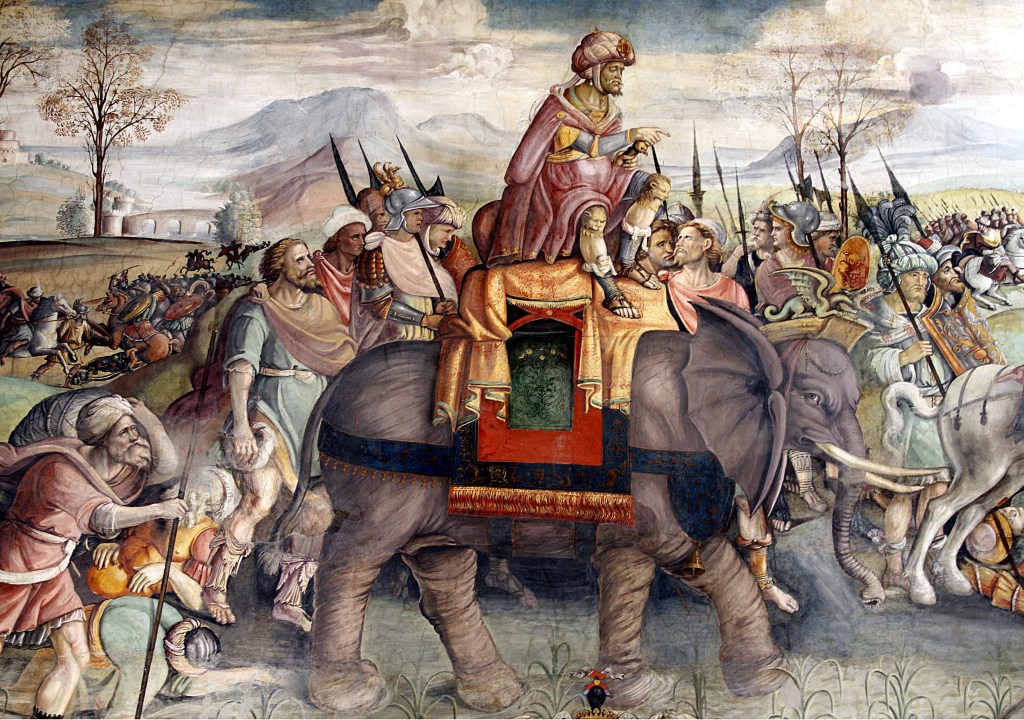
Nel 217 a.C., Annibale sconfisse il console romano Flaminio al Lago Trasimeno. Tuttavia, a causa della distruzione da parte dei Romani di tutti i ponti che avrebbero permesso ad Annibale di raggiungere Roma, fu costretto a deviare. Dopo un assedio fallito alla fortezza di Spoleto, decise di dirigersi verso il Piceno, dove le popolazioni alleate con i Romani erano state le prime ad attaccare le sue truppe nella Battaglia del Trasimeno. Qui, sull’altopiano tra l’attuale Colfiorito (PG) e Serravalle del Chienti (MC), tra Umbria e Marche, vicino all’antica città di Plestina, situata sulle rive del lago omonimo (che fu prosciugato dai Duchi di Varano nel XV secolo attraverso una grande opera di ingegneria chiamata “hote dei Varano”), cinquemila Romani guidati dal tribuno Gaio Centenio lo stavano aspettando. Seguì immediatamente una battaglia, ma data la superiorità numerica di Annibale—probabilmente più di dieci volte quella di Gaio, secondo gli storici romani—l’esercito del tribuno fu accerchiato e i Romani, incluso Gaio Centenio, furono sterminati. La zona continua a produrre reperti archeologici di quella sanguinosa battaglia, anche se la famosa armatura di Annibale, che la leggenda locale dice sia stata sepolta sotto una collina per onorare i molti caduti, non è ancora stata trovata. I toponimi continuano a richiamare quel sanguinoso scontro: “Cesi” (caduti in battaglia), “Copogna” (Col Punicum) e molti altri fino a “Campo Annibale”.
Dopo questa ulteriore vittoria, Annibale decise di far riposare il suo esercito tra l’attuale Recanati e il mare, lungo il fiume Potenza, in una località ancora chiamata “Campo Annibale” dai locali. Questa decisione suggerisce che all’epoca la zona lungo il fiume Potenza non fosse abitata dai Piceni, poiché i Romani in seguito dichiararono la città di Potentia all’uscita del fiume come territorio piceno, indicando che non erano presenti tribù picene alleate con i Romani.
Dieci anni dopo, nel 207 a.C., Annibale, tornando dall’Apulia per aiutare suo fratello Asdrubale, riorganizzò il suo esercito a Pollenza (MC) prima di accamparsi lungo le rive del fiume Metauro. Molti Galli alleati con Asdrubale, forse vedendo nei Cartaginesi una possibilità di redenzione dai Romani, che avevano diviso i loro territori nel 283 a.C., si unirono a lui. Anche una parte dei Piceni, sebbene in minoranza, si alleò con i Cartaginesi. Tuttavia, i Romani, con l’aiuto di altre comunità picene e galliche, sconfissero Asdrubale al Metauro, portando la sua testa a Roma mentre il suo corpo, lasciato sul posto, fu presumibilmente sepolto sulla collina di Montelce vicino a Fermignano (PU) sotto quello che è ora un rudere di una probabile torre medievale. Come scrisse Orazio, questa battaglia “dissipò le ombre su Roma”. Annibale fu costretto a ritirarsi verso sud. Durante questa ritirata, i Piceni fondarono la città di Picentia nell’entroterra di Salerno. È irrilevante in questo contesto se la presenza picena lì fu dovuta a un movimento spontaneo dopo Annibale o se fu forzata dai Romani come rappresaglia per alcuni Piceni che avevano aiutato i Cartaginesi. Nonostante la sconfitta, i Piceni e i Galli nella regione delle Marche non si arresero. Tuttavia, i Romani, dopo aver sottomesso definitivamente i Boi nella zona di Bologna nel 191 a.C., nel 184 a.C. conquistarono e colonizzarono due città: Potentia nel Piceno e Pisaurum (Pesaro) nel territorio gallico.
Le notizie storiche e le testimonianze relative alle guerre nel territorio delle Marche tra Piceni, Galli, Romani, e spesso uniti da Greci e Cartaginesi, sono numerose e sarebbe inutile elencarle tutte in questo contesto. Tuttavia, esse attestano come i Galli fossero popoli italici che hanno scritto pagine fondamentali di storia prima che i Romani conquistassero i territori dell’attuale Francia e Germania.
Hannibal’s Battles (English Version)
In 217 B.C., Hannibal defeated the Roman consul Flaminius at Lake Trasimeno. However, due to the Romans destroying all the bridges that could allow Hannibal to reach Rome, he was forced to deviate. After a failed siege of the fortress of Spoleto, he decided to turn towards Piceno, where the people allied with the Romans had been the first to attack his troops at the Battle of Trasimeno. Here, on the plateau between present-day Colfiorito (Pg) and Serravalle del Chienti (Mc), between Umbria and Marche, near the then city of Plestina, located on the shores of the lake of the same name (which was drained by the Dukes of Varano in the 15th century through a great engineering work called the “hote dei Varano”), five thousand Romans led by the tribune Gaius Centenius were waiting for him. A battle ensued immediately, but given Hannibal’s numerical superiority—probably more than ten times that of Gaius, according to Roman historians—the tribune’s army was encircled and the Romans, including Gaius Centenius, were slaughtered. The area still yields archaeological artifacts from that bloody battle, although the famous armor of Hannibal, which local legend says he buried under a hill to honor the many fallen, has not yet been found. Place names still echo that bloody confrontation: “Cesi” (fallen in battle), “Copogna” (Col Punicum), and many others up to “Campo Annibale”.
After this further victory, Hannibal decided to rest his army between present-day Recanati and the sea, along the Potenza River, in a location still called “Campo Annibale” by locals. This decision suggests that at the time, the area along the Potenza River was not inhabited by the Piceni, as the Romans later declared the city of Potentia at the mouth of the river to be in Piceno territory, indicating no Picene tribes allied with the Romans were present.
Ten years later, in 207 B.C., Hannibal, returning from Apulia to help his brother Hasdrubal, reorganized his army at Pollenza (Mc) before camping along the banks of the Metauro River. Many Gauls allied with Hasdrubal, perhaps seeing in the Carthaginians a chance for redemption from the Romans, who had divided their territories in 283 B.C. Even a part of the Piceni, although a minority, allied with the Carthaginians. However, the Romans, with the help of other Picene and Gallic communities, defeated Hasdrubal at the Metauro, bringing his head to Rome while his body, left in place, was supposedly buried on the hill of Montelce near Fermignano (PU) under what is now a ruin of a probable medieval tower. As Horace wrote, this battle “dispelled the shadows over Rome.” Hannibal was forced to retreat south. During this retreat, the Piceni founded the city of Picentia in the Salerno hinterland. It is irrelevant in this context whether the Picene presence there was due to a spontaneous move following Hannibal or was forced by the Romans as retaliation for some Piceni aiding the Carthaginians. Despite the defeat, the Piceni and Gauls in the Marche region did not give up. However, the Romans, after definitively subduing the Boii in the Bolognese area in 191 B.C., in 184 B.C. conquered and colonized two cities: Potentia in Piceno and Pisaurum (Pesaro) in Gallic territory.
The historical news and testimonies related to wars in the Marche territory between Piceni, Gauls, Romans, and often joined by Greeks and Carthaginians, are numerous and it would be pointless to list them all in this context. However, they attest to how the Gauls were Italic peoples who wrote fundamental pages of history before the Romans went on to conquer the territories of present-day France and Germany.
Photo 1: https://it.wikipedia.org/wiki/Annibale
Source: II + II. La storia dei popoli delle Marche ovvero l’origine dell’Europa – Simonetta Torresi








Rispondi