
English version follows at the end
La critica delle fonti è un metodo per valutare e verificare la credibilità delle informazioni provenienti da diverse fonti. Originariamente sviluppata nel campo della storiografia per distinguere tra informazioni plausibili e miti o propaganda presenti in testi storici e religiosi, questi criteri si sono dimostrati utili anche in altri ambiti scientifici, tra studenti, giornalisti, scrittori e chiunque cerchi di comprendere la realtà attraverso il flusso di informazioni della società. I criteri includono l’analisi dell’autore della fonte, il momento della sua creazione, lo scopo per cui è stata creata e se le informazioni possono essere verificate e si allineano con altre fonti indipendenti.
Raccomandazioni comuni per gli scrittori di saggi includono il porre le seguenti domande riguardo a ciascuna fonte:
- Chi è l’autore della fonte? L’autore è un esperto nel campo e neutrale?
- Qual è lo scopo della fonte? È quello di presentare informazioni fattuali in modo oggettivo, fare pubblicità, sostenere opinioni personali o intrattenere?
- Le informazioni sono attuali? È disponibile una data di pubblicazione?
- La pubblicazione è stata verificata e approvata da altri? Esiste un’agenzia governativa o una grande organizzazione dietro le informazioni, ed è importante per l’organizzazione che le informazioni siano accurate? La fonte è una pubblicazione di ricerca recensita da altri studiosi? È un libro di testo pubblicato da una casa editrice accademica?
- Altri possono verificare le informazioni? L’autore cita fonti o fornisce informazioni di contatto, o l’autore divulga la metodologia utilizzata per raggiungere conclusioni in modo che l’indagine o l’esperimento possano essere replicati?
- Esistono altre fonti credibili? Altre fonti dicono la stessa cosa?
Principles of Source Criticism (English version)
Source criticism is a method for evaluating and assessing the credibility of information from various sources. Originally developed in the field of historiography to distinguish between plausible information and myths or propaganda found in historical and religious texts, these criteria have also proven useful in other scientific fields, among students, journalists, writers, and anyone seeking to understand reality through society’s flow of information. The criteria include analyzing the author of the source, the timing of its creation, the purpose for which it was created, and whether the information can be verified and aligns with other independent sources.
Common recommendations for essay writers include asking the following questions about each source:
- Who is the author of the source? Is the author an expert in the field and neutral?
- What is the purpose of the source? Is it to present factual information objectively, advertise, argue for personal opinions, or entertain?
- Is the information current? Is there a publication date available?
- Has the publication been fact-checked and approved by others? Is there a government agency or large organization behind the information, and is it important for the organization that the information is accurate? Is the source a research publication reviewed by other scholars? Is it a textbook published by an academic publishing house?
- Can others verify the information? Does the author cite sources or provide contact information, or does the author disclose the methodology used to reach conclusions in a way that allows the investigation or experiment to be replicated?
- Are other credible sources available? Do other sources say the same thing?
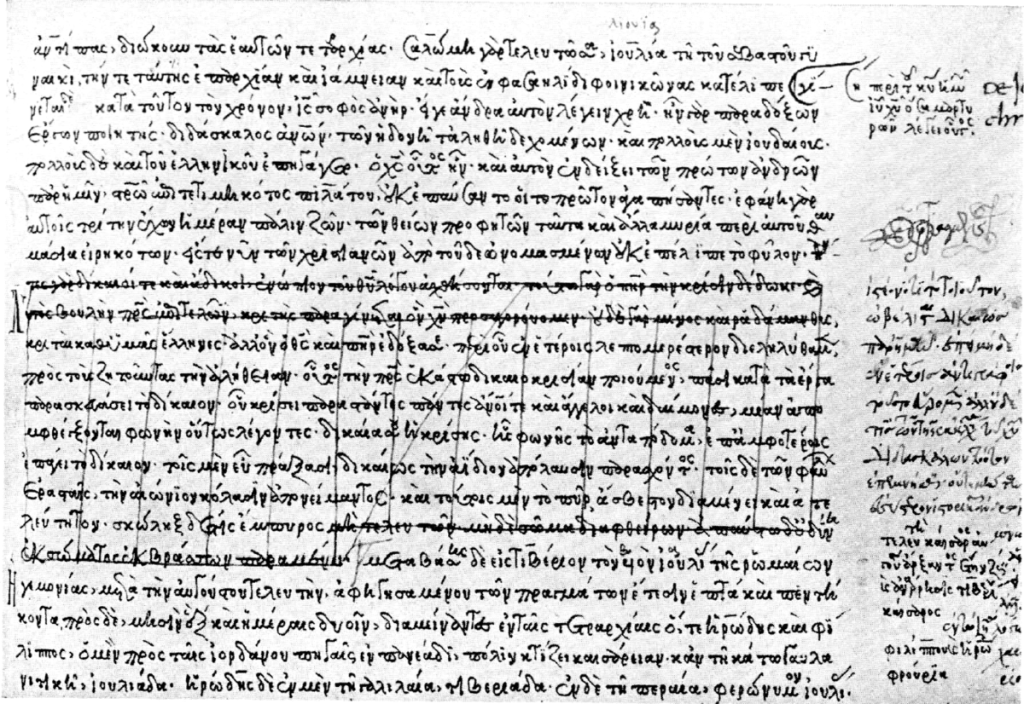
Photo 1: An excerpt from Flavius Josephus’ Testimonium Flavianum has been inserted into a 15th-century transcript of another work by the author, along with another text with a clear Christian bias. This additional insertion has been crossed out by a Byzantine scholar with the justification that it was absent in the manuscripts known at that time.
Source: Wikipedia







Rispondi